📌 A Quick Note Before We Begin: The following scenario is a fictionalized simulation designed to illustrate common workflow bottlenecks in the industry. Names, characters, and events are purely illustrative to demonstrate how digital tools can help.
If you run a distribution business in Sarawak, you know that making the sale is only half the battle. The real victory is when the money actually hits your bank account.
But when your business relies on traditional, physical paperwork to prove that a delivery was made, your cash flow is essentially at the mercy of a single, fragile piece of paper: The Delivery Order (DO).
Let’s look at a scenario that keeps many distribution owners up at night.
The Missing Signature Nightmare
It’s the end of the month. Your accounts executive, Karen, is running through the aging accounts receivable list. She notices a massive outstanding invoice of RM50,000 from a government hospital in Sibu for a shipment of dialysis consumables delivered three weeks ago.
Standard payment terms mean the money should be on its way, but it hasn’t arrived. Karen calls up the hospital’s finance department to check on the status.
The officer on the other line responds calmly: “Kami belum terima proof of delivery, boss. We cannot process the payment voucher without the signed, stamped blue copy of the Delivery Order. Please send it over first.”
Karen goes to the physical filing cabinet where all the returned DOs from the outstation trips are kept. She flips through the Sibu folder.
Nothing. It’s empty.
She frantically calls Ah Siong, the delivery driver who did the central-to-outstation run three weeks ago. Ah Siong is currently on the road near Sri Aman.
“Eh Karen, I remember that delivery lah!” Ah Siong yells over the engine noise. “The hospital staff signed it. I kept the paper in the van. Wait, let me check…”
Ah Siong pulls over and rumbles through the glove compartment, under the passenger seat, and behind the sun visor. Ten minutes later, he finds it crumpled at the bottom of his lunch bag. It’s stained with laksa broth from three weeks ago, and the crucial signature and official hospital stamp are completely smudged and unreadable.
Karen’s heart sinks. Without a clear proof of delivery, the hospital finance team will not release the funds. You now have RM50,000 locked in limbo, an accounts team wasting hours playing detective, and a driver feeling stressed—all because of one soggy piece of paper.
The Turning Point: Real-Time Digital Proof
Now, let’s replay that exact same scenario, but with one small “shift” using Google Workspace.
Six months earlier, the company decided to digitize its delivery tracking process. They didn’t buy an expensive logistics tracker; they simply set up a free, secure Google Form and linked it to a Google Drive folder named “Signed DO Archives.”
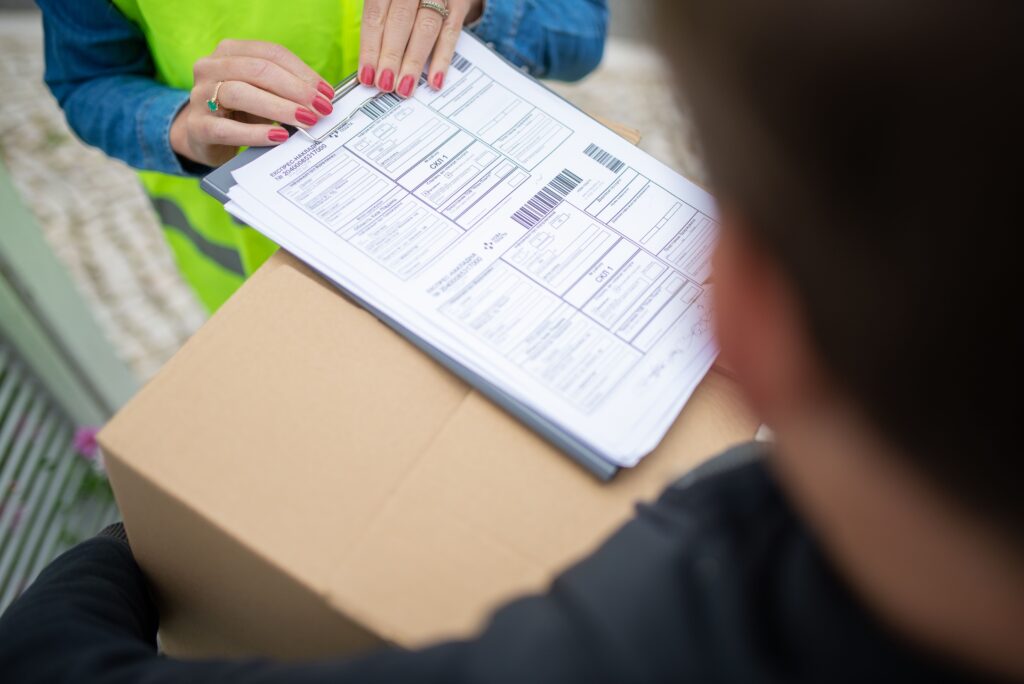
Three weeks ago, when Ah Siong delivered the dialysis consumables to the Sibu hospital, the clerk signed and stamped the physical paper DO just like before.
But before Ah Siong even climbed back into his driver’s seat, he took out his smartphone, tapped a shortcut link on his home screen, and did three quick things:
- He selected the Client Name (Sibu Hospital) from a dropdown menu.
- He typed in the DO Number.
- He tapped “Upload,” his phone camera opened, and he snapped a crystal-clear photo of the signed and stamped DO.
He hit submit. Time elapsed: 45 seconds.
Back at the Kuching HQ, that photo instantly landed in the secure Google Drive folder.
Three weeks later, when the hospital finance department claimed they didn’t have proof of delivery, Karen didn’t need to call Ah Siong, and she didn’t need to search any physical files. While still on the phone with the officer, she opened Google Drive, searched the DO number, pulled up the crystal-clear photo of the signed document, and emailed it straight to them.
The hospital officer replied: “Ah, ok, I see the stamp. Payment approved.”
The Shift Tip: Secure Your Cash Flow, Not Just Your Files
When local SMEs think about “Digital Workspaces,” they often assume it’s just about being modern or saving trees. They don’t realize it is deeply connected to their cash flow.
If your business relies on physical papers traveling across Sarawak in delivery vans, your cash flow is traveling in those vans too. If a paper gets wet, lost, or misplaced, your money gets trapped.
By setting up a dead-simple mobile upload process using Google Forms and Google Drive, your office gets proof of delivery the exact second your client signs for it. You protect your company’s money, eliminate end-of-the-month panic, and let your drivers focus on driving—not acting as paper keepers.